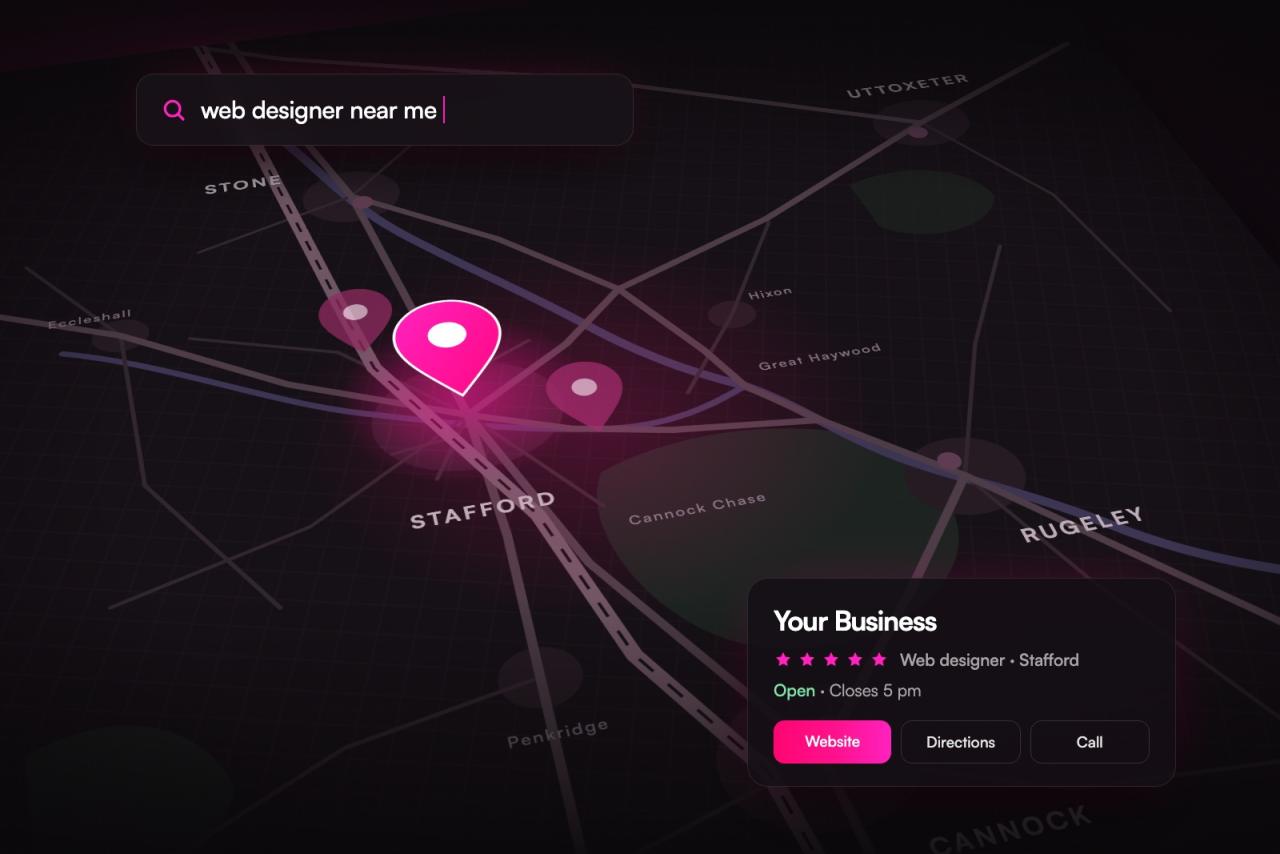
Search for a plumber, a florist or a web designer on your phone and the first thing you usually see is a map with a short list of businesses beneath it. For many local firms, that list matters more than anything further down the page. It is where people compare options, read reviews, tap to call and ask for directions.
The good news is that local search is not a lottery. Google is fairly open about what it looks at, and most of what helps is within a small business's control. None of it needs a big budget, but it does need doing properly and keeping up to date.
How Google decides what to show locally
Google says its local results are based mainly on three things: relevance, distance and prominence.
- Relevance is how well your business matches what someone searched for. That comes from your Google Business Profile, your categories and the content on your website.
- Distance is how far you are from the person searching, or from the place they mentioned, such as "accountant in Stone".
- Prominence is how well known and trusted your business is, judged from things like reviews, links, mentions elsewhere and the strength of your website.
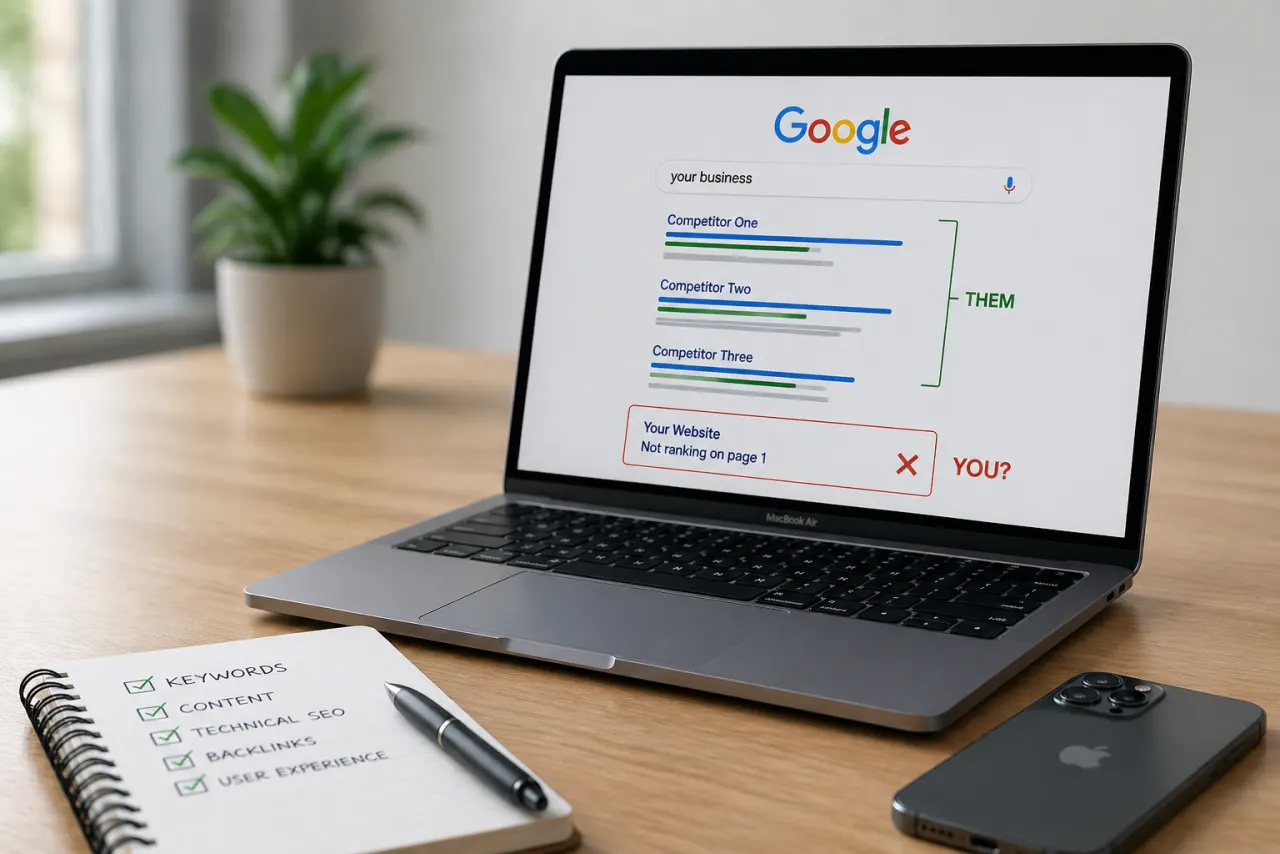
You cannot move your premises closer to every customer, so the work goes into relevance and prominence. If your website is not showing up at all, even for your own services, start with our guide to why websites do not rank on Google, then come back to the local steps below.
Start with your Google Business Profile
If you only do one thing after reading this, make it this. Your Business Profile is what appears in the map results and alongside searches for your business name, and for many people it is their first impression of you.
- Claim and verify it. If a profile already exists for your business, take ownership of it rather than creating a duplicate.
- Choose your primary category carefully. It should describe what you are, not everything you do. Add secondary categories only where they genuinely apply.
- Set a service area if you travel to customers. Trades and mobile businesses can list the towns they cover and hide their address if customers do not visit.
- Keep your hours accurate, including bank holidays and Christmas. Few things lose trust faster than a customer arriving at a closed door.
- Add real photos of your work, premises and team. Stock images do little for anyone.
- Write a plain description of what you do and where, in the words your customers would use.
Make sure the website link goes to the most relevant page. For a business with one location that is usually the homepage; if you have more than one, link each profile to its own location page.
Keep your name, address and phone number consistent
Search engines cross-check your business details across the web. If your website footer, Business Profile, Facebook page and directory listings all show slightly different names, addresses or phone numbers, it is harder for them to be confident they all describe the same business.
Pick one version of your business name, address and main phone number and use it everywhere. If you move or change number, update your website first, then your Business Profile, then any directories and social profiles you can find. Bing Places and Apple Business Connect are worth claiming too, as they feed the maps and search results in other apps.
Give each service and area a proper page
Your website is one of the main ways Google judges relevance. A single services page listing ten things in bullet points gives it very little to work with. A clear page for each important service, explaining what it involves, who it is for and what happens next, gives it far more, and helps your customers too.
Location pages can help when you genuinely serve an area, but they need something real to say. A page about your work in Rugeley should talk about Rugeley: projects you have done there, how you work with customers in the area, and answers to the questions people there actually ask. Copying one page twenty times and swapping the town name creates what Google's spam policies call doorway pages, and they rarely help anyone.
We follow the same approach on our own site, where our web design pages for Staffordshire towns are built around real local projects rather than a template with the town name changed.
Reviews: ask for them, and reply to them
Reviews influence both where you appear and whether people choose you. Someone comparing three businesses on a map will read what customers say, and how each business responds.
- Ask at the right moment, usually soon after a job has gone well, while it is fresh in the customer's mind.
- Make it easy. Send the direct review link from your Business Profile in a follow-up email or text rather than asking people to search for you.
- Reply to every review, good and bad. A calm, helpful reply to a poor review often reassures future customers more than another five stars would.
- Never buy reviews or only ask the customers you know are happy. Fake reviews are banned under UK consumer law and Google's policies, and Google's rules also forbid selectively asking for positive reviews.
Make your website clearly local
It sounds obvious, but plenty of business websites never actually say where the business is. If your site does not mention the towns and areas you serve, it is much harder to appear when people search for them.
- Mention your town and county naturally in page titles and headings where it fits, for example "Kitchen fitters in Stafford" rather than just "Kitchens".
- Show your address, or the areas you cover, and your phone number in the footer, and make the number tappable on mobile.
- Add directions and parking information to your contact page if customers visit you.
- Show local work: case studies, project photos and testimonials from customers in the area.
- Add LocalBusiness structured data, which describes your business, address, opening hours and service area to search engines in a format they can read reliably.
Remember that local searches often happen on a phone
A lot of local searching happens on mobile, often when someone needs something soon. A website that is slow, hard to read on a small screen or hides the phone number will lose those people, however well it ranks.
Check your own site on your phone, on mobile data rather than office wifi. Can you see what the business does, where it is and how to get in touch within a few seconds? If not, that is worth fixing before anything else. Our guide to why websites do not generate leads goes into more detail.
Build local links and mentions
Links and mentions from other local websites help show that your business is established in the area. The best ones come from real relationships rather than link-building schemes:
- Suppliers, partners and trade bodies that list members or recommended businesses
- Local business groups and chambers of commerce
- Clubs, charities and events you sponsor or support
- Local news coverage of projects, openings, awards or milestones
Avoid buying links or paying for bulk directory submissions. At best they are wasted money; at worst they count against you.
What to check each month
Local SEO is not a one-off job, but ten minutes a month keeps most of it on track:
- Your Business Profile performance figures: calls, direction requests and website clicks
- New reviews, and whether each one has a reply
- Opening hours, especially before bank holidays
- Google Search Console, to see which searches, including place names, bring people to your site
- Any changes to your profile suggested by Google or the public
The short version
Getting found locally comes down to being relevant, being trusted and being easy to choose. Claim and complete your Business Profile, keep your details consistent, give your main services and areas proper pages, earn and answer reviews, and make sure your website works well on a phone.
None of that is complicated, but it rewards the businesses that do it properly and keep it up. If your website is part of what is holding you back, SEO setup and optimisation is included in every bespoke website we build.