
A website can look good, load quickly, and still do very little for your business.
That’s the part a lot of people don’t expect. Once a site is live, there’s an assumption that enquiries will start coming in. Maybe not instantly, but steadily over time.
Then nothing really happens.
Traffic might be there, or it might not, but either way, the end result is the same. No consistent leads, no real return, and no clear reason why.
In most cases, it comes down to a disconnect between what the website is doing and what the user actually needs when they land on it.
A common issue is clarity. When someone arrives on your site, they’re usually asking themselves a few basic questions straight away. What does this business do? Is it relevant to me? Can I trust it? What should I do next?
If those answers aren’t obvious within the first few seconds, people leave. Not because the service isn’t right, but because it’s not clear enough.
A lot of websites try to sound polished instead of being direct. Phrases that look good on paper but don’t actually say anything meaningful tend to get in the way. From the outside, it feels like effort, but from a user’s point of view, it creates friction.
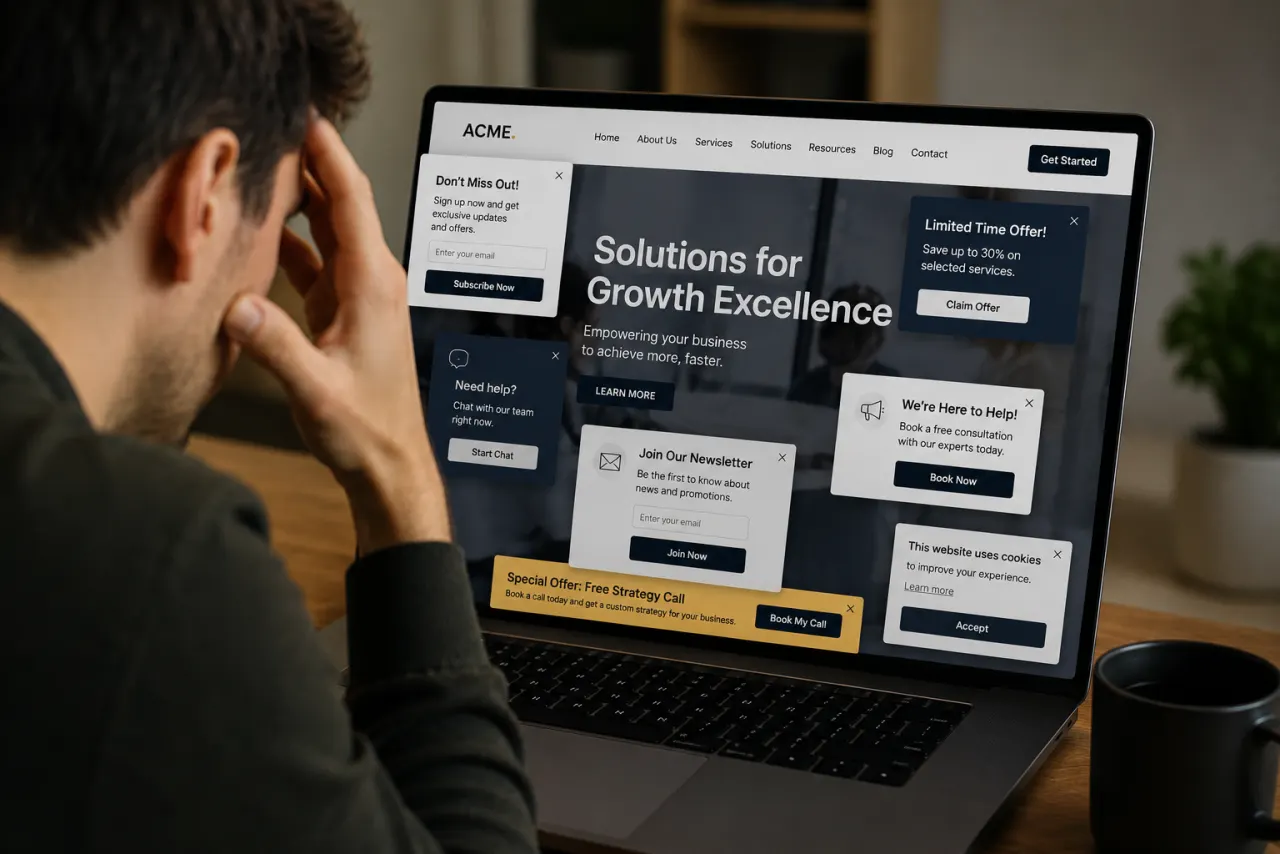
Then there’s the structure of the site itself. It’s surprisingly common to see businesses bury important information or make simple actions harder than they need to be. Contact forms hidden away, unclear navigation, too many options competing for attention.
The more steps someone has to take, the less likely they are to take any of them.
Another factor is intent. Not all traffic is equal, and not all visitors are ready to convert. If your site is attracting the wrong audience, or if the content doesn’t match what people were expecting when they clicked through, you end up with visitors who were never likely to enquire in the first place.
This is where SEO and content play a bigger role than people realise. It’s not just about getting traffic, it’s about getting the right kind of traffic.
Trust is another piece that often gets overlooked. From your side, the business might feel established and credible, but from a new visitor’s perspective, they’re making a quick judgement based on what they can see.
If there’s no proof, no examples, no indication that you’ve done this successfully before, it becomes harder for someone to take that next step. Even small things like testimonials, case studies, or clear explanations of your process can make a difference.
There’s also the question of expectation. Sometimes websites ask for too much too soon. A long contact form, too many required fields, or a push to “get a quote” before the user has fully understood what’s on offer.
People tend to move at their own pace. If the site doesn’t allow for that, they drop off.
And then there’s performance, which sits quietly in the background but still has an impact. Slow loading speeds, clunky mobile experiences, or small usability issues can be enough to push someone away, even if everything else is right.
None of these things on their own will always stop leads coming through. But when a few of them combine, the effect adds up.
What usually works better is simplifying things. Making it immediately clear what you do and who it’s for. Structuring the site so the next step feels obvious. Matching your content to what people are actually searching for. Adding enough proof to build confidence without overloading the page.
It’s less about adding more, and more about removing friction.
A website that generates leads tends to feel easy to use. There’s a natural flow to it. You don’t have to think too hard about what to do next.
Getting to that point is rarely accidental.
It comes from understanding how people behave when they land on a site, and adjusting things accordingly. Small changes in wording, layout, or structure can have a noticeable impact when they’re made in the right places.
That’s usually where an outside perspective helps. When you’re close to your own business, it’s easy to miss the gaps because everything feels obvious.
At Web Optic, this is something we spend a lot of time on. Not just building websites, but refining how they perform once people arrive. Looking at where users drop off, what’s unclear, and what’s getting in the way of conversions.
Once those issues are addressed, the difference tends to be quite clear. Not just more traffic, but better enquiries from people who already understand what you offer.